App
Industry
Creative
Client
Vestibullum
Service
Web Design
Date
April 2025
A symbol is a pictorial icon, seal, or badge employed to foster comprehensive recognition and endorsement. It could manifest as a symbolic or creative depiction or incorporate the word it stands for, as exemplified in a logotype.
CHALLENGE
Design a scalable appointment scheduling system for a fintech platform that could support multiple appointment types, virtual and in-person logic, availability constraints, waitlists, and cancellation policies while maintaining a simple, frictionless booking experience.
The solution also needed to be adaptable across multiple client brands, requiring a flexible structure that could be re-skinned without altering the underlying logic.
SYSTEM LOGIC
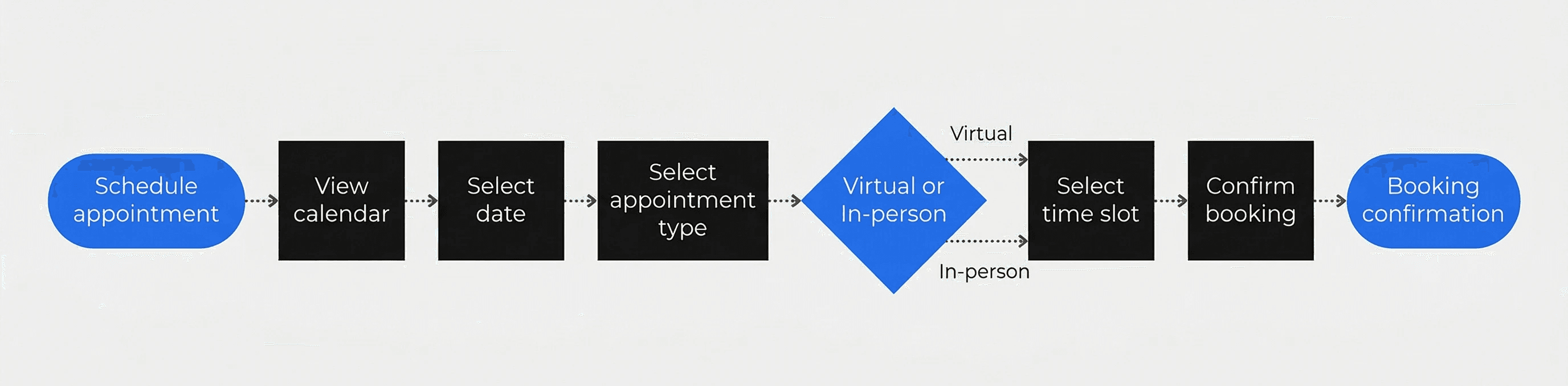
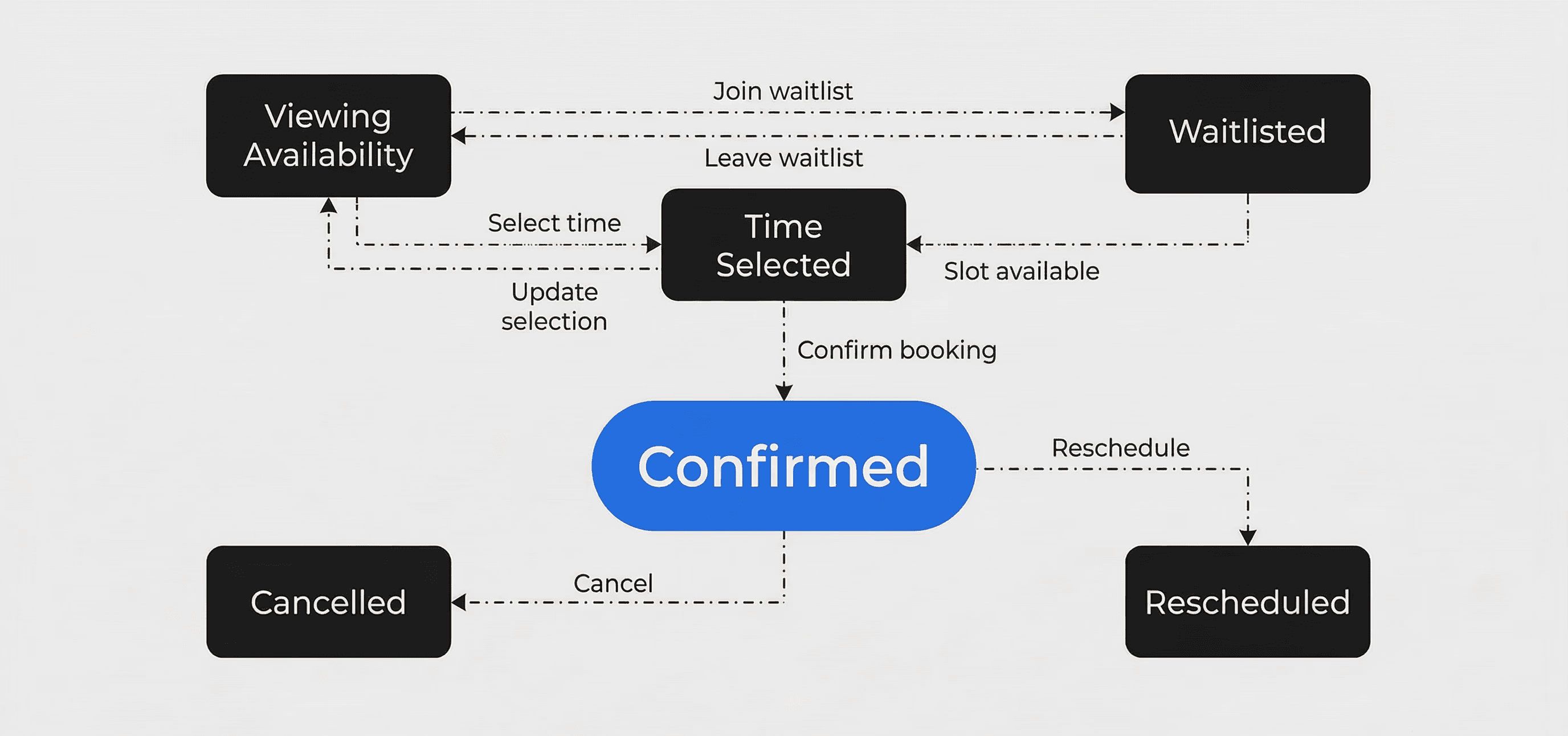
The appointment flow was architected around system states and conditional logic to ensure predictable transitions between booking, rescheduling, cancellation, and waitlist scenarios. This approach simplified frontend complexity while maintaining structural consistency for white-label use. The following diagrams illustrate the high-level user journey and the underlying state model that guided interaction and system behaviour.
USER FLOW
STATE MODEL
ITERATION
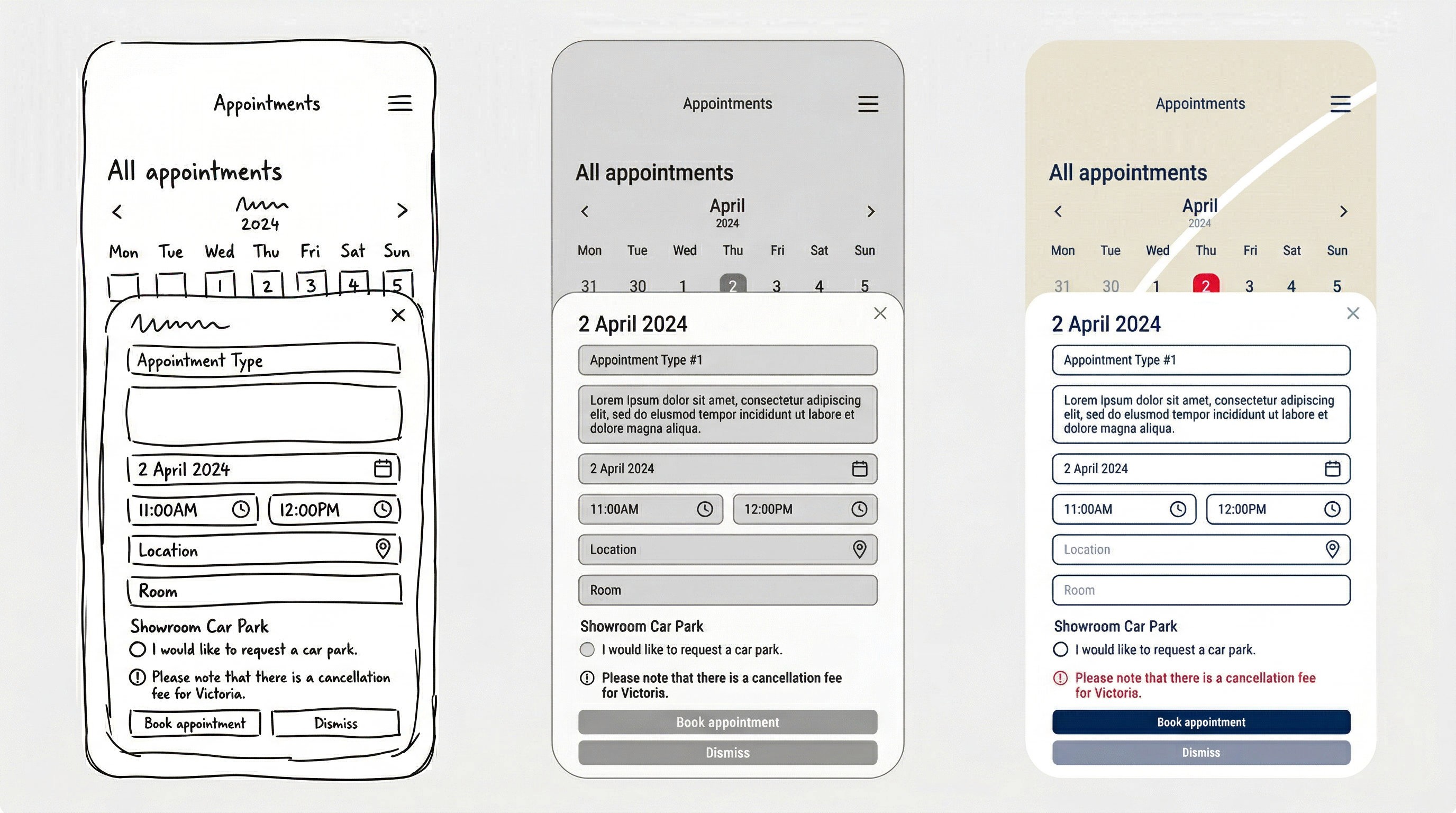
Low-fidelity exploration focused on layout hierarchy, field grouping, and conditional input placement before applying visual styling. This ensured the booking logic was validated early and translated cleanly into the final branded interface.
UI DESIGN
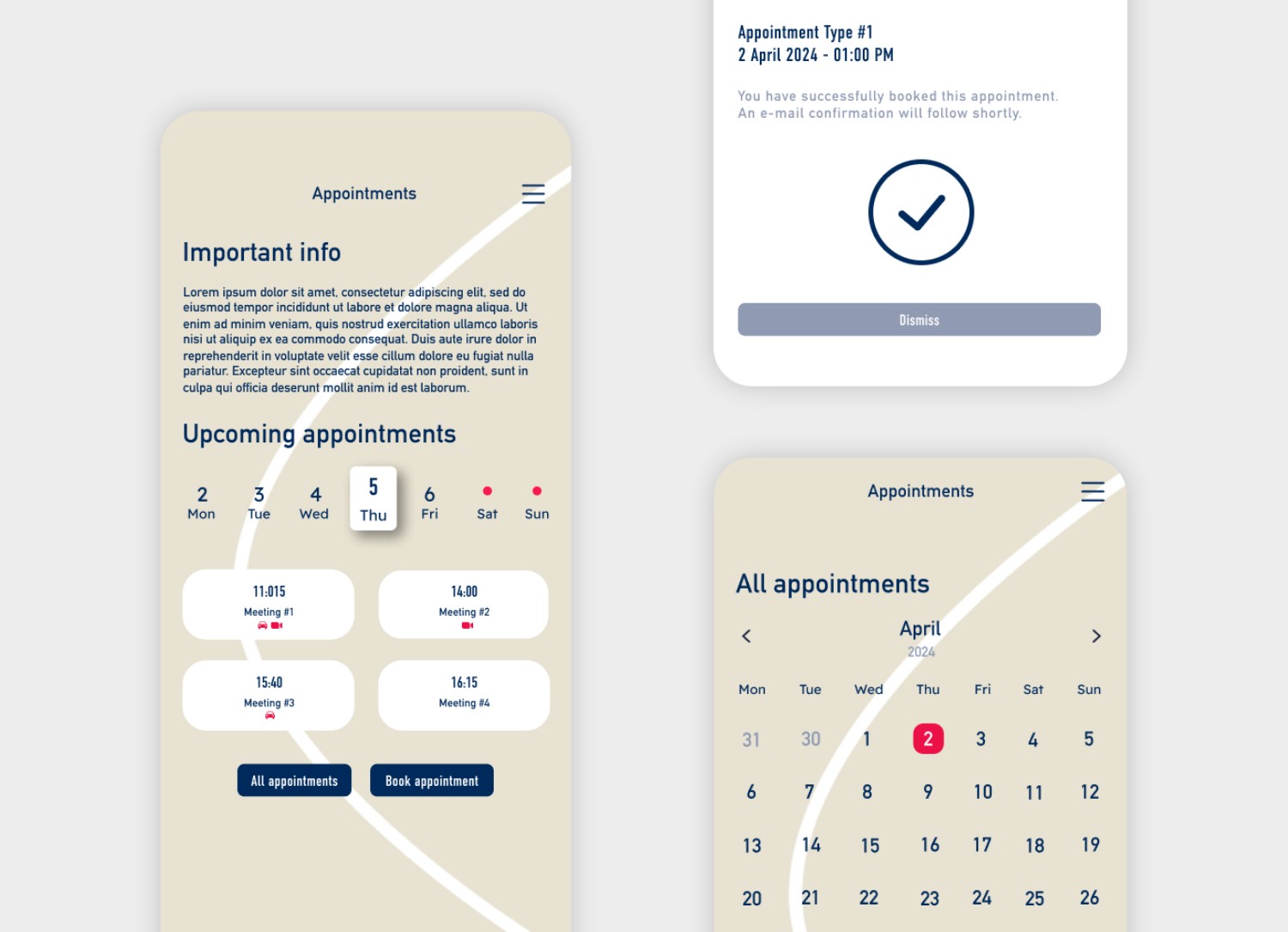
The interface translates complex booking logic into a clear, step-based experience. Inputs are grouped by intent, and conditional fields appear only when relevant to reduce cognitive load.
The layout was built using a structured set of reusable components, ensuring consistency across flows and enabling efficient re-skinning for multiple client brands. This modular approach supported scalability without altering the underlying booking logic.
OUTCOME
Delivered a reusable appointment scheduling system aligned with complex booking logic and multi-brand deployment requirements. The state-driven structure reduced ambiguity in edge cases and supported consistent implementation across client environments.